





The Emergency Foodshelf Network follows hunger statistics, so we can best serve the agencies that assist families and individuals in need. Below you will find key statistics about hunger and poverty.
We have split our statistics into two different areas, one focusing on children and the other focusing on adults.
Hunger in Minnesota
- There are more than 300 foodshelves in Minnesota, serving every county in the state.
- In 2006, clients visited foodshelves 1.8 million times statewide, distributing 42 million pounds of food. i
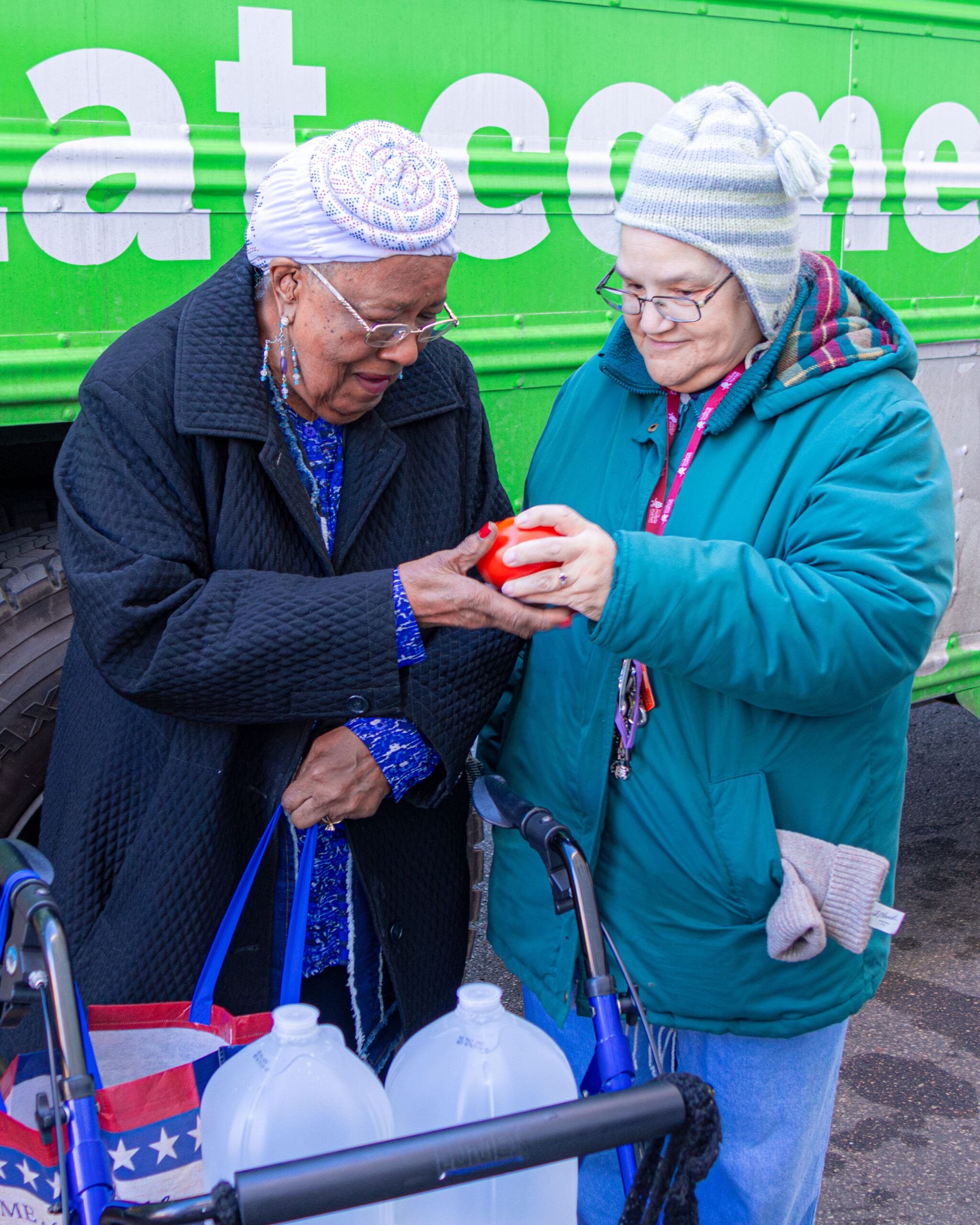
- 15 percent of foodshelf clients are seniors.i
- More than 50 percent of adult foodshelf clients work. i
- In Twin City suburbs, the working poor make up 60 percent of foodshelf clients.i
- Nearly ¾ of foodshelf clients live in unaffordable housing: half spend more than 50 percent of their income on housing and ¼ spend between 30-50 percent of their income on housing.i
- 260,000 Minnesotan’s (five percent) use food stamps each month to feed their families.iii
- A recent Hormel Foods survey reported one in four Minnesotans said they or someone in their family had visited a food shelf. One in 10 residents said they or someone in their family went to bed hungry in the past month because of lack of money for food. ii
Food Insecurity and Poverty Among Children
- 56 percent of foodshelf visitors are families with children.i
- 10.4 percent of Minnesota’s children are living in poverty (The definition of poverty in 2004 was $18,850 for a family of four.)
- 9.7 percent of Minnesota’s children receive food support.iv
- In 2004, 61 percent of low-income families spend more than 30 percent of their income on housing.v
- In 2004, Minnesota’s population under the age of 18 was 1,240,280. The number of these children living below federal poverty level was 49,611. Low-income is considered 200 percent of the federal poverty level. 334,876 of these children lived in low income families.v
- 700 children under 18 are homeless in Minnesota.vi
- In 2004, 61 percent of low-income families spend more than 30 percent of their income on housing.v
- In 2004, Minnesota’s population under the age of 18 was 1,240,280. The number of these children living below federal poverty level was 49,611. Low-income is considered 200 percent of the federal poverty level. 334,876 of these children lived in low income families.v
- 700 children under 18 are homeless in Minnesota.vi
Hunger throughout the Nation
- Commodity Supplemental Food Program (CSFP) issued more than 5.5 million 40-pound food packs last year to 485,614 individuals, 90 percent of whom are elderly. vii
- 50 percent of CSFP respondents said they ran out of food during the month. vii
- A recent Hormel Foods survey reported one in four Minnesotans said they or someone in their family had visited a food shelf. One in 10 residents said they or someone in their family went to bed hungry in the past month because of lack of money for food. ii
- There are an estimated 9,200 and 9,300 total homeless on any given night in Minnesota. vi.
i. (State of hunger in Minnesota, 2006)
ii. (Legal Services Advocacy Project “1Simple Task” Feb. ’07)
iii (MN Buget Project Feb. ’07)
iv. (Early Childhood in MN 2006 Data book)
v. (Anne E. Casey Foundation, Kids Count 2006)
vi. (Wilder Foundation, March 2007)
vii. (National Commodity Supplemental Food Program Feb., 5, ’07)